
Why Caliche Soil and Rock Landscaping Attract Scorpions in Sierra Vista
If you’ve treated for scorpions and still see recurring activity, call +1 (520) 210-7030 for a free inspection. The soil and landscaping under your property may be doing more to attract them than anything happening at the surface. Here’s the actual mechanism, explained plainly.
What Caliche Actually Is
Caliche is a cemented layer of calcium carbonate that forms naturally in arid soils, common across much of Cochise County, often sitting just below the topsoil. It’s hard, sometimes requiring mechanical equipment to break through, and critically, it drains very poorly compared to typical topsoil.
The Moisture Mechanism: How Caliche Creates Scorpion Habitat
When monsoon rain falls on caliche-heavy soil, water can’t drain downward the way it would through normal, permeable soil it pools and lingers just below the surface instead. That trapped moisture, combined with the shade from rock landscaping or block walls above it, creates a cool, damp microhabitat directly beneath the areas homeowners often assume are the driest parts of their yard. Scorpions, along with their prey (crickets and other insects), are drawn to exactly this kind of stable, moist shelter during Arizona’s otherwise punishing heat.
Why Rock Landscaping Makes This Worse, Not Better
Decorative rock beds and xeriscaping are standard in Sierra Vista, partly because of water-conservation expectations and partly because many HOAs require it. Unfortunately, rock cover does double duty for scorpions: it shades the caliche-trapped moisture beneath it from evaporating as quickly, and it provides physical cover from predators and direct sun. A rock bed against a foundation is, functionally, a scorpion apartment complex insulated, moist, and directly adjacent to entry points into your home.
Does This Mean I Need to Remove All My Rock Landscaping?
Not necessarily. The most practical fix is usually keeping rock landscaping away from direct foundation contact — even a foot or two of clearance changes the equation significantly, combined with targeted residual treatment at the foundation itself. Complete removal is rarely necessary or realistic given HOA requirements and water-conservation goals; the goal is separation and treatment, not elimination of xeriscaping altogether.
How This Explains Why Spraying Alone Doesn’t Work
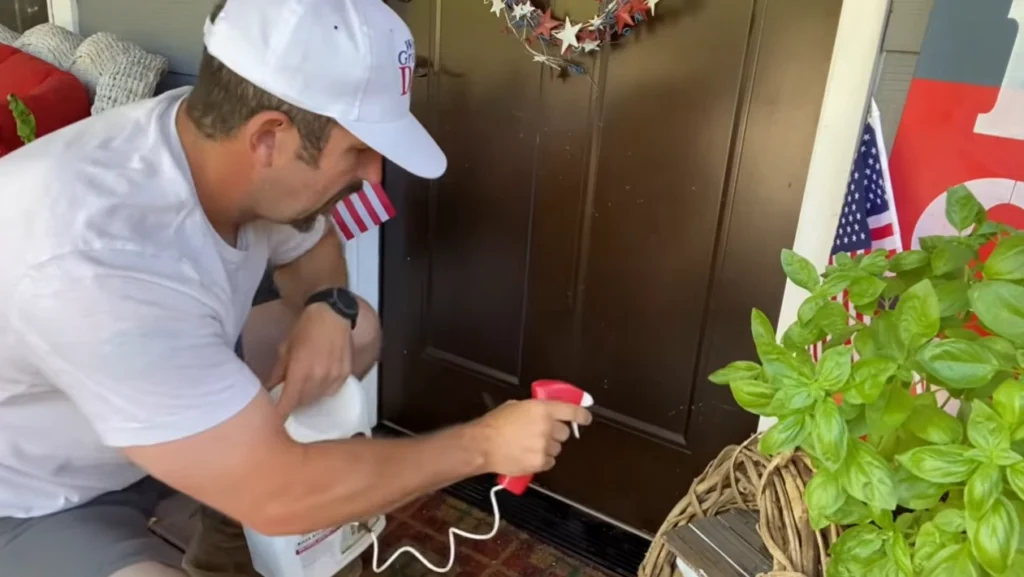
A surface-level perimeter spray treats the top of the soil and the visible parts of rock beds, but doesn’t reach the moisture and shelter forming underneath. This is the core reason DIY scorpion spray often looks effective for a week or two, and then activity returns; the treatment never addressed the caliche-and-rock moisture trap actually driving the population.
What Effective Treatment Looks Like Given This Mechanism
- Harborage assessment identifying which rock beds and landscaping features sit closest to the foundation
- Foundation-focused residual treatment, since that’s where the moisture-and-shelter combination is most concentrated
- Landscaping recommendations: practical adjustments to clearance, not wholesale removal
- Exclusion sealing the entry points scorpions use once they leave the rock bed and reach your walls
How Caliche Affects Termites Too, Not Just Scorpions
The same poor-drainage mechanism that creates scorpion habitat also keeps soil near your foundation damp enough, for long enough, to support subterranean termite activity, one of the reasons Sierra Vista sees termite pressure that colder, better-draining regions don’t experience at the same intensity. Addressing moisture and drainage around a foundation is genuinely dual-purpose: it reduces both scorpion harborage and termite-favorable conditions at the same time.
Can I Test Whether My Property Has a Caliche Layer?
Most Cochise County properties have some degree of caliche, so the more useful question isn’t whether it’s present but how close to the surface it sits and how it’s affecting drainage near your specific foundation. A professional inspection assessing moisture patterns and harborage proximity gives you more actionable information than trying to identify caliche depth yourself.
Frequently Asked Questions
Get a Free Inspection
Call or text +1 (520) 210-7030 to schedule a free inspection with a licensed technician. We’ll show you exactly what we find and what it will cost before any work begins.
Pest Control Sierra Vista AZ 51 S 2nd St, Sierra Vista, AZ 85635 +1 (520) 210-7030